The best floor lamps for warm ambient light in a living room
A living room feels different when daylight fades and the overhead light is switched off. A well-placed floor lamp creates a soft pool of warm ambient light, gives a sofa or reading chair a visual anchor, and lets the room shift into the easy, cosy mood many Australians enjoy after dinner. The aim is a gentle glow that makes the space feel settled rather than staged.
Choosing the right lamp involves more than checking whether it fits the furniture. Light colour, shade material, brightness, dimming and scale all affect the result. Australian homes, from compact city apartments to open-plan family houses, benefit from a lamp that feels comfortable and simple to use.
Find the glow your room needs
Start by deciding what the lamp must do. A torchiere sends light upward for broad ambient illumination, an arc lamp reaches over a sofa, and a slim reading lamp throws focused light beside a chair. Lantern-style models add atmosphere rather than strong task lighting, while tripod lamps suit a relaxed, casual interior.
Warm ambient light usually comes from an LED rated around 2200–2700K. A 3000K bulb can work in a cooler, grey-toned room, but the lower Kelvin ranges feel softer at dusk. Choose brightness with the shade in mind: roughly 800–1100 lumens is useful for a single reading lamp, while an upward-facing fixture may need more output to lift the ceiling.
A dimmer gives the lamp flexibility: set it low for conversation and raise it for reading, with the diffuser in place to reduce glare. A colour rendering index of CRI 90 or higher makes timber, fabric, artwork and food colours look richer, which matters when the lamp sits near a kitchen or dining area.
Choose a shade that diffuses the warmth
The shade controls whether the light looks crisp or soft. Linen, cotton or paper in cream, oat or warm white filters glare and spreads illumination across the room. A frosted glass or opal diffuser creates a clean glow, while a metal shade gives a sharper pool of light and suits a more industrial interior.
Shape and proportion matter as much as colour. A drum shade suits a clean, modern lamp; a tapered cone directs light down for reading; a bell or dome opens upward for a gentle wall wash. The shade should look balanced with the base and wide enough to soften a single bulb. Very small shades can expose a bright LED and make the room feel harsh.
Check how the bulb is positioned from the usual seated viewpoint. Exposed decorative filaments can be appealing, but very bright points of light may cause discomfort. For everyday use, favour a diffused bulb, fabric shade or integrated opal lamp. Test the lamp with the room’s night-time lighting as well as in daylight.
Match the style to the space
A black metal floor lamp adds crisp definition to pale walls and neutral furniture. Brushed brass brings warmth to timber and earthy colours, while a timber tripod base creates a lighter, mid-century look. Rattan and woven shades feel natural in coastal rooms and can make a compact space seem less heavy in Australia’s bright, often warm climate.
Scale the lamp to the seating. A very tall, narrow base may disappear beside a low sofa, while an oversized shade can crowd a small apartment. Look for a stable weighted base, particularly around busy family spaces where children or pets pass through. A slim pole lamp can tuck into a tight corner, but an arc model is better when light must reach over furniture.
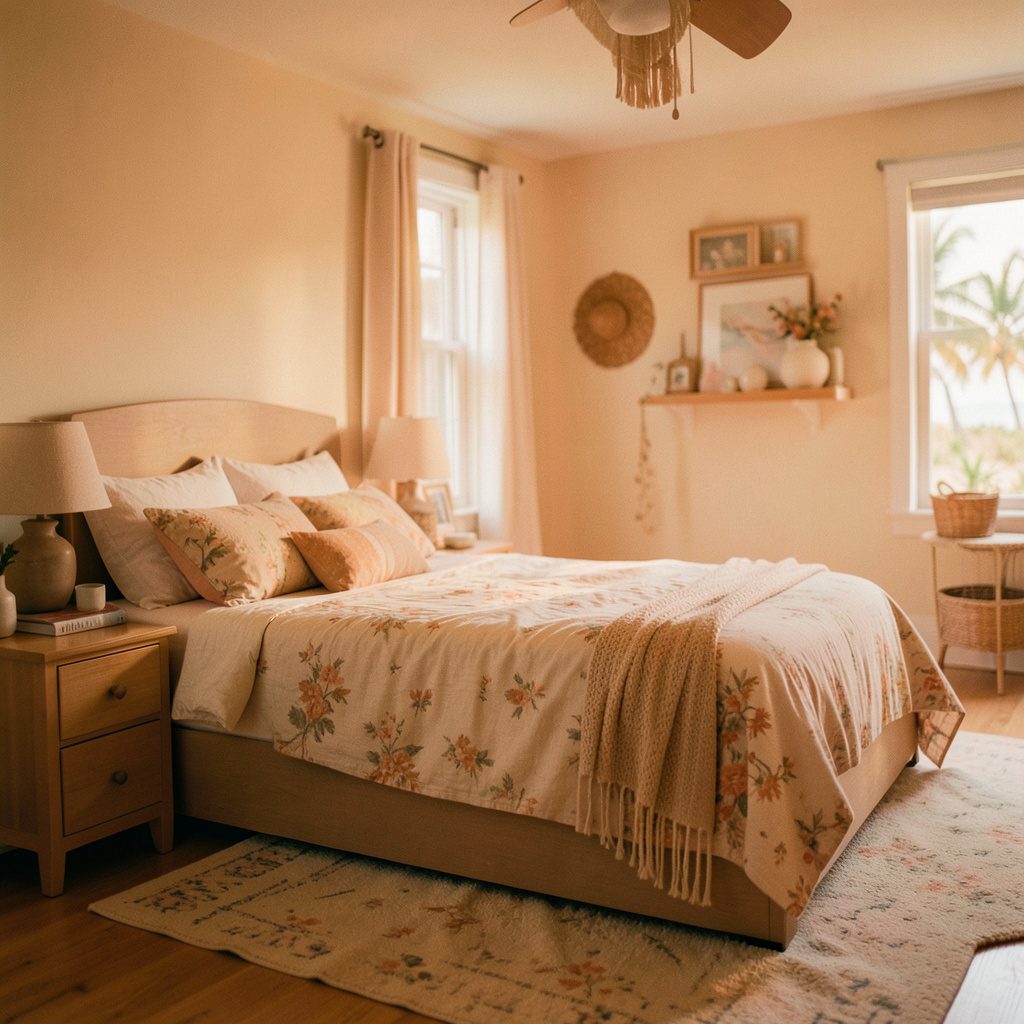
The living room often connects to the rest of the house, so its finish should agree with adjoining spaces. For a coastal Australian home, coastal bedroom ideas can help you carry the same breezy palette into a nearby reading space. Repeated materials such as pale timber, woven textures and matte black metal then make the overall interior feel resolved.
Place the lamp for comfort and safety
Begin with the activity. Put a reading lamp just behind and to one side of a chair so light falls over the open page without shining into the reader’s eyes. For a sofa, allow the lower edge of the shade to sit around eye level when seated. An arc lamp can hover over the seating, but its swing and shade position need clearance from curtains and shelves.
Watch the route from the front door to the kitchen, and do not place a base where someone is likely to catch it. In an open-plan room, one lamp near the sofa can balance a ceiling pendant over the dining table, while another near a window can reveal the evening outside. Switch off or dim the overhead fitting to see whether shadows gather awkwardly behind the main seating.
Australian electrical standards matter when choosing where the cord can run. Most homes use 220–240V power and Type I plugs, so check the lamp’s voltage and plug type before purchase. Keep extension leads out of walkways, avoid overloading power boards, and position fabric shades clear of heat sources. Renters should check their agreement before fixing a lamp or drilling a switch, and a qualified electrician should handle hardwired work.
Shop the Australian market
Australian shoppers can compare floor lamps at Bunnings, Kmart, Target, Harvey Norman, lighting specialists, local showrooms and online marketplaces. Big retailers make it easy to compare size, bulb fittings and customer ratings, while a specialist can advise on dimmer compatibility or unusual replacement shades. Product pages should state voltage, wattage, lamp dimensions and whether the bulb is included.
Look for the Australian Regulatory Compliance Mark on electrical products. Its presence indicates that the supplier has lodged the required compliance information for the Australian market, although the mark alone does not replace sensible product checks. Confirm that the packaging, flex, plug and switch feel sound, and read the warranty and fault information before paying. Australian consumer guarantees provide recourse for faulty goods, so keep the receipt and packaging.
Prices are normally shown in Australian dollars and generally include GST, making direct comparisons easier. Click-and-collect can be practical in Sydney, Melbourne, Brisbane and regional centres, while delivery is worth checking for bulky or tripod bases. Seasonal sales, including the end-of-financial-year period, can reduce the cost of a higher-priced fixture. A retailer offering clear returns and good value for money is usually safer than the lowest unverified listing.
Make your final choice and light the room
Compare the main forms by function. Choose a torchiere for ceiling wash and broad ambience, an arc lamp for a sofa that needs light from above, and a focused reading lamp for a chair or book nook. For a multipurpose room, a dimmable model with a neutral finish is often the easiest one-lamp solution.
Then check the details that affect daily use: a weighted base, a reachable switch, a replaceable LED, a diffuser that reduces glare, and a shade that can be cleaned. Make sure the lamp matches the room’s proportions and that the manufacturer provides useful replacement parts. These practical points often matter more than a decorative feature that is difficult to maintain.
Browse the Joebolte room galleries, save the layouts and finishes that suit your home, then choose a warm dimmable LED and place it beside your favourite seat. Switch off the ceiling light, lower the lamp to a comfortable level, and make yourself at home in a living room with the kind of soft, welcoming glow that works every evening.