Nightstand alternatives for a small beach-themed bedroom
Compact bedrooms are common in apartments and inner-city terraces across Sydney, Melbourne, Brisbane, Adelaide and Perth, where every centimetre affects circulation. Choosing nightstand alternatives for a small beach-themed bedroom works best when the replacement supports a clear path beside the bed and still holds the few items used from dusk until morning.
Many bedside tables are 450–500 millimetres wide and deep, so their legs, drawer and visual weight can make a modest room feel crowded. A better approach starts with purpose: a phone, water, a book, earbuds and a lamp. Everything else can live on a nearby desk, shelf or hook.
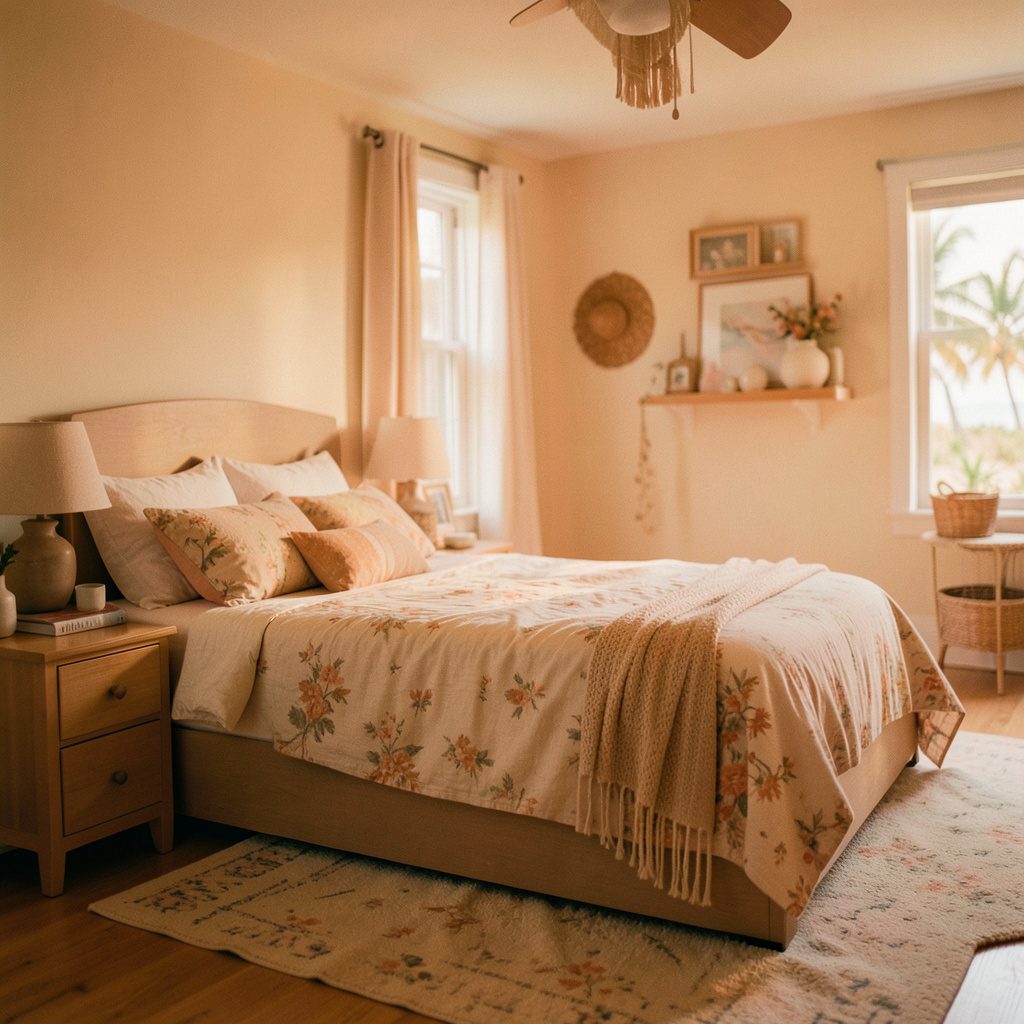
Make the plan around Australian routines. Early swimmers need somewhere for keys and sunscreen, shift workers need a charging point within reach, and humid evenings call for a surface that can take a damp glass. Coastal colour can come from pale timber, woven fibres, linen and soft blue-green accents without filling the room with nautical decorations.
Budget, installation and long-term use matter too. Check measurements before browsing Bunnings, Kmart, IKEA, Gumtree or a local market, and ask a landlord or strata committee before drilling into a rented apartment. The final choice should be stable, easy to clean and comfortable beside the bed rather than merely small.
Why a standard bedside table feels oversized
A traditional table has to balance several demands: storage, a stable top and a frame that does not visually collapse beside the bed. In a narrow room, even a practical model can interrupt the natural route between the door and the rest of the space. The issue is often less about the physical footprint and more about the bulky silhouette it creates.
Measure the bed, doorway and usable wall before selecting anything. A surface around 300–350 millimetres wide may be enough for a lamp and phone, while a drawer unit should be considered only if it can open without hitting the bed. Leave enough room to walk around the mattress and make the bed without pulling furniture away from the wall.
Also account for stability. Tall or narrow freestanding pieces should be secured where children or clumsy late-night movements are a concern. When buying from an Australian retailer, the Australian Consumer Law requires goods to be of acceptable quality, so inspect flat-pack fittings, check the instructions and test any moving parts before use.
Wall-mounted options that keep the floor open
A floating bedside shelf is one of the simplest ways to create a dedicated surface without adding legs to the floor. Choose a narrow board that extends just far enough to hold a lamp base, phone and glass, then style the underside with a simple bracket or shallow drawer. The result feels lighter than a conventional table, especially in a room with a low bed.
Wall-hung drawers provide more storage while retaining the open appearance underneath. A 150–200 millimetre-deep unit can work beside a bed, but its projection must clear the mattress and any headboard. If the bedroom is in an apartment, confirm whether fixing holes or painting are permitted under the tenancy agreement and any applicable building or strata rules.
Plan the charging cable before installation. Run it along the wall rather than across the walkway, and position a lamp where its cable cannot be caught by a foot or pinched when the bed moves. Electrical fittings sold in Australia should meet the relevant safety requirements, while fixed lighting or new power points are best assessed by a qualified electrician.
Slim pieces that still offer drawer space
A narrow pedestal, compact drawer tower or rolling cart can provide more storage than an open shelf without returning to the proportions of a full bedside table. Look for widths around 250–300 millimetres and check the full dimensions including handles. A slim ladder-style shelf can also sit beside the bed, although its angled frame may occupy more floor area than expected.
Mobile pieces are useful in Australian apartments where one surface may serve several purposes. A cart can move beside the bed at night and return to a desk or dressing area during the day. Add brakes, keep the centre of gravity low and avoid placing heavy glassware on the top shelf. Casters should be appropriate for the floor finish so they roll quietly over timber, vinyl or carpet.
For the coastal look, pair functional forms with pale timber, painted metal, woven cane panels or warm-white finishes. The market in Australia offers plenty of options, from flat-pack storage to repurposed industrial pieces found through Gumtree and weekend flea markets. At second-hand sales, confirm the actual measurements and inspect the top for stains, warping or tired joints.
Use built-in and overlooked surfaces
A headboard ledge can act as a bedside surface if the bed frame allows one, while a desk placed close to the head of the bed can handle the lamp, phone and a glass of water. A windowsill may work in a sunny bedroom, provided it is deep enough and the furniture does not obstruct ventilation or an escape route. A narrow bench at the foot of the bed offers another option when storage below is more useful than a surface at shoulder height.
Choose materials that tolerate coastal conditions. Untreated MDF can swell in humid weather, unprotected metal may corrode near the sea and light fabrics fade under strong ultraviolet light. Solid timber, sealed plywood, powder-coated metal and washable woven fibres are easier to maintain. Linen or cotton-look covers can add softness without making the room feel overly themed.
Second-hand timber deserves a quick inspection before it enters a warm, enclosed bedroom. General pest control advice can help with early identification, while any treatment in Australia should be arranged through an operator licensed in the relevant state or territory. Cleaning the piece and keeping it slightly away from skirting boards reduces the risk of bringing an unwanted problem indoors.
Bring the coastal mood together
A small alternative surface still needs visual calm. Use one tray to contain the phone, keys and a pair of earbuds, then limit accessories to a warm-white lamp, a small book and perhaps a shell or piece of driftwood. A muted palette of sand, sea glass, chalk white and faded blue will feel more relaxed than a collection of bright nautical motifs.
Lighting can carry much of the beach-inspired atmosphere without adding decoration. Choose a warm-white bulb around 2700K and a shade that casts a soft pool of light. Keep cords concealed, add a wall hook nearby for headphones and use the available desktop or shelf for sunscreen, water and a morning drink. The Joebolte design galleries can help you compare coastal furniture, colour combinations and room layouts before committing to a style.
Measure the space again, set a budget and choose the one alternative that solves your nightly routine most cleanly, then gather the lamp, tray and storage pieces before moving anything into place.