How to Pick the Perfect Bedding for a Coastal Climate
A coastal bedroom should feel cool, relaxed and easy to live in. The right bedding helps create that atmosphere while responding to practical concerns such as humidity, warm nights, salt air and sudden changes in temperature. Fabric, filling, colour and care all influence how comfortable the room feels.
Homes near the coast often need bedding that dries quickly and allows air to circulate. This matters in humid areas such as Brisbane and Cairns, where heavy doonas can feel uncomfortable for much of the year. Even in milder coastal cities like Sydney or Perth, summer bedrooms benefit from lightweight, breathable layers.
The best coastal bedding also complements a natural interior palette. Soft whites, sandy neutrals, pale blue, sea green and washed grey can echo the surrounding landscape without making the room feel themed. Texture adds visual interest, allowing simple colours to look considered rather than plain.
Australian bedrooms also have their own practical requirements. Bedding must fit local mattress dimensions, suit the familiar doona-and-cover arrangement and cope with strong sunlight, open windows and regular washing. A beautiful set is useful only when it remains comfortable and easy to maintain.
Start With Breathable Natural Fibres
Cotton is a reliable choice for coastal homes because it feels light against the skin and allows heat to escape. Look for percale cotton if you prefer a crisp, cool finish, or choose cotton sateen for a smoother and slightly warmer feel. A medium thread count is often more breathable than very dense, heavy fabric.
Linen is especially well suited to beachside bedrooms. Its relaxed texture improves with washing, and it can feel cool in summer while providing some warmth in cooler weather. Linen bedding may crease more readily than cotton, though that casual finish suits coastal interiors. Cotton-linen blends offer a softer price point and easier handling.
Bamboo and Tencel sheets are also available through the Australian bedding market. Their smooth feel can suit sensitive skin, while their moisture-managing properties are useful in humid conditions. Check the care instructions and fibre composition carefully, as product quality varies between suppliers.
Choose A Weave That Matches The Weather
The weave affects the way bedding feels, even when the fibre is the same. Percale has a firm, airy structure that works well for warm sleepers and summer use. Its matte finish suits simple coastal rooms with timber furniture, rattan accents and natural flooring.
Linen has a looser, textured appearance, while jersey cotton feels soft and stretchy like a favourite T-shirt. Jersey can be cosy, though it may feel warmer than expected in a humid room. Flannel and brushed cotton are better reserved for cooler southern climates or winter guest rooms.
Avoid very heavy jacquard covers, dense microfibre and thick synthetic fabrics if the bedroom tends to trap heat. These materials may look polished in a showroom but can restrict airflow. Touch samples in person where possible, especially when buying from Australian retailers such as Sheridan, Adairs or independent homewares stores.
Select A Lightweight Doona Filling
A lightweight doona is often more useful in a coastal climate than a single all-season option. Wool fillings provide natural insulation and can help regulate temperature, while cotton and bamboo blends offer a lighter feel for warmer months. Down and feather doonas can be comfortable, but they may retain warmth and require careful cleaning.
Pay attention to the doona’s GSM, or grams per square metre. A lower GSM is generally better for hot weather, while a medium-weight quilt can handle cooler nights. In Queensland, a light summer doona may be enough for much of the year. In Victoria or Tasmania, a layered system gives greater flexibility.
A practical arrangement includes a breathable blanket, a lightweight doona and a coverlet that can be removed easily. This approach is particularly useful around the Australian summer holiday period, when bedrooms may need to accommodate family guests in changing weather.
Build Comfort With Flexible Layers
Layering makes a bedroom adaptable without requiring a complete bedding change each season. Begin with a fitted sheet, add a flat sheet if you like a traditional bed, then finish with a light quilt or doona. A cotton waffle blanket can provide warmth without the weight of a thick winter cover.
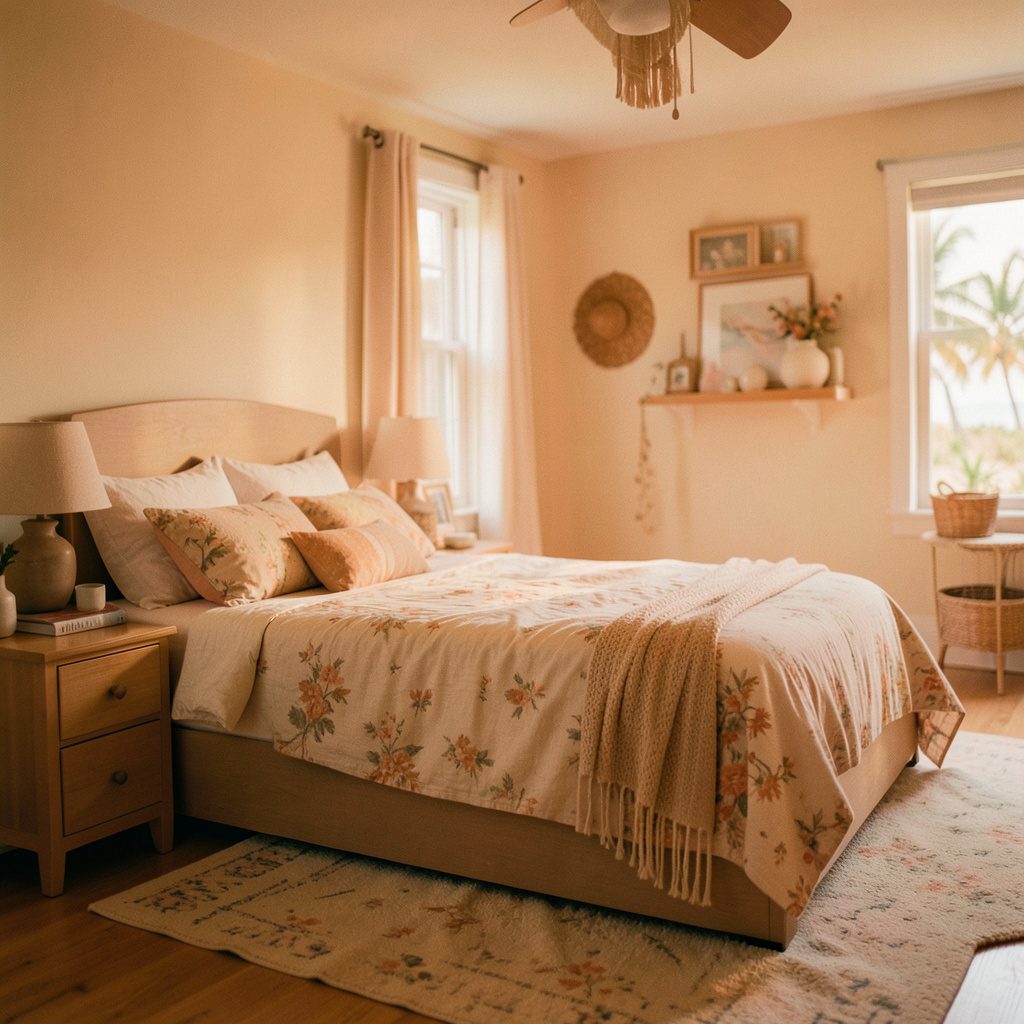
Keep decorative layers at the foot of the bed rather than covering the entire sleeping area. A woven throw in washed blue, cream or natural oat adds texture and can be moved aside at night. Cushion arrangements should remain comfortable and easy to remove, especially when the room is used every day.
For coastal homes, breathable layers are more practical than excessive decoration. Choose pieces that can be washed regularly and stored in a dry, ventilated cupboard. Vacuum-packed storage bags may save space, though bedding should be completely dry before packing to prevent musty odours.
Use Colour To Reflect The Coast
A coastal palette does not have to rely on bright navy stripes or obvious nautical motifs. Soft sand, chalk white, driftwood beige, eucalyptus, muted aqua and storm grey create a calmer, more contemporary effect. These colours work well with pale timber, white-painted walls and woven storage.
In a bedroom with strong northern light, cooler blue and green tones can balance the warmth. Rooms facing south may benefit from warmer oatmeal, shell pink or soft taupe. Consider how sunlight changes throughout the day before choosing a dominant colour, as pale fabrics can look very different in morning and afternoon light.
Pattern is most effective when used sparingly. Fine stripes, subtle checks or small botanical designs can add character without overwhelming the room. If the bedding is patterned, keep curtains and larger furniture fairly quiet so the space remains restful.
Protect Bedding From Humidity And Salt Air
A breathable mattress protector is a worthwhile investment in a coastal home. Choose cotton terry, Tencel or another washable material rather than a thick plastic-feeling cover. It protects the mattress from perspiration and spills while allowing air to move through the sleeping surface.
Wash sheets regularly, particularly during humid summer weather, and dry them thoroughly before making the bed. Outdoor drying is ideal when conditions allow, though strong Australian sunlight can fade darker colours over time. Rotate the direction of the doona cover and avoid leaving damp towels or swimwear on the bed.
Salt air can gradually affect metal hardware, window fittings and nearby textiles. Keep the bedroom ventilated, but use sheer curtains or blinds during the brightest part of the day. In homes close to the beach, a washable cotton coverlet can provide an extra barrier between everyday use and the main doona cover.
Check Fit, Care And Everyday Practicality
Australian bedding sizes can differ from imported products, so measure the mattress before purchasing. Confirm the depth of the fitted sheet, especially if the bed includes a pillow-top mattress or a separate topper. An oversized flat sheet may look attractive, but it can become untidy if it is not suited to the mattress dimensions.
The doona cover should match the doona size rather than relying on a loose visual fit. Australian retailers commonly label bedding as single, king single, double, queen and king, with some products available in super king. Check measurements whenever possible because sizing can vary between brands.
Read the washing instructions before buying. Machine-washable linen and cotton are convenient for busy households, while delicate decorative covers may require more care than expected. For a guest house, beach apartment or family holiday home, choose durable bedding that can withstand frequent laundering and still look inviting.
Bring the room together with bedding that feels cool, washes easily and reflects the softer side of coastal living. Explore Joebolte’s bedroom inspiration galleries for more ideas involving ocean-inspired colour, natural texture and comfortable Australian home styling.