How to make a guest house feel larger with mirrored walls
A small guest house can feel crowded long before every surface is occupied. Mirrored walls can counter that by returning daylight, extending sightlines and making compact furniture read as part of a broader room. The effect is strongest when the reflection is bright, simple and connected to the architecture.
That matters in Australia, where a secondary dwelling may be called a granny flat, a studio or a backyard guest house. These spaces often begin as a converted garage, garden shed or self-contained unit, and they need to work hard for overnight visitors without looking like a showroom squeezed into a leftover corner.
A mirrored feature wall works best when it is deliberate. One oversized mirror can create a clearer sense of depth than a collection of mismatched pieces, while the wrong installation may catch glare, expose clutter or make the room feel busier. Measure first, control what is reflected and build the scheme around the room rather than the other way round.
Read the room before choosing a mirror
Begin by studying the room from the doorway and the main window. Note where the ceiling, floor and opposite walls meet, because a mirror amplifies whatever it sees. Facing a plain wall will make that surface seem further away. Facing a radiator, worktop or crowded shelf will make those details look twice as prominent.
Measure the wall rather than estimating from the floor. Check ceiling height, skirting, window positions and the likely viewing angle from a guest bed or sofa. A full-width panel set tightly against the wall usually extends the room more convincingly than a small mirror with a wide decorative frame. Keep it clear of doors and vents, and leave room to clean around the edges.
Choose a mirror format that suits the space
Choose one dominant format instead of filling every surface. An oversized frameless panel offers the cleanest effect, a full-length mirror can suit a compact bedroom, and mirrored wardrobe or cabinet doors can turn storage into a reflective feature. A grid of identical panels can work in a modern room, provided the joints stay straight and the wall is completely flat.
Australian shoppers can find ready-made mirror sheets and full-length mirrors at retailers such as Bunnings, while a local glazier or mirror shop can quote a custom cut, frame and installation. Compare the delivered size and fixing cost, not only the shelf price. For odd walls, a made-to-measure panel may use the space more efficiently than forcing a standard rectangle into it.
Use light to deepen the room
Position the main mirror to pull light through the room rather than simply decorate a wall. Opposite or adjacent to a window, it can reflect daylight into a darker corner; set at right angles to a doorway, it can reveal a deeper view beyond the entry. In a Sydney home, north-facing glass may create strong glare, so sheer curtains can soften it. Melbourne terraces often rely on softer southern light, which a mirror can distribute more evenly.
After dark, treat the reflection as another lighting layer. Place dimmable sconces or table lamps where the mirror will catch their warm glow rather than exposing bright bulbs. Warm-white LEDs around 2700K make a compact room feel calmer and more welcoming. Avoid facing two large mirrors directly at each other; repeated reflections can feel dizzying and turn a small guest house into a confusing visual tunnel.
Plan for Australian heat, salt and movement
Australian conditions deserve attention. Coastal properties around Sydney, the Central Coast and the Gold Coast can encounter salt-laden damp that spots unprotected glass and corrodes exposed fixings. Humid climates also encourage mould around poorly sealed frames. Keep full-height panels away from shower splash zones, use sealed edges and bathroom-appropriate safety backing where appropriate, and never let timber framing sit wet.
Temperature swings can make large glass panels and their frames move, so secure them to studs with fixings suited to the wall. A leaning mirror needs an anti-tip bracket, particularly in a home with children. Renters should check with the landlord before drilling; a removable full-length mirror can offer the visual benefit with less disruption. Keep vents, smoke alarms and escape routes unobstructed.
Style the reflection with restraint
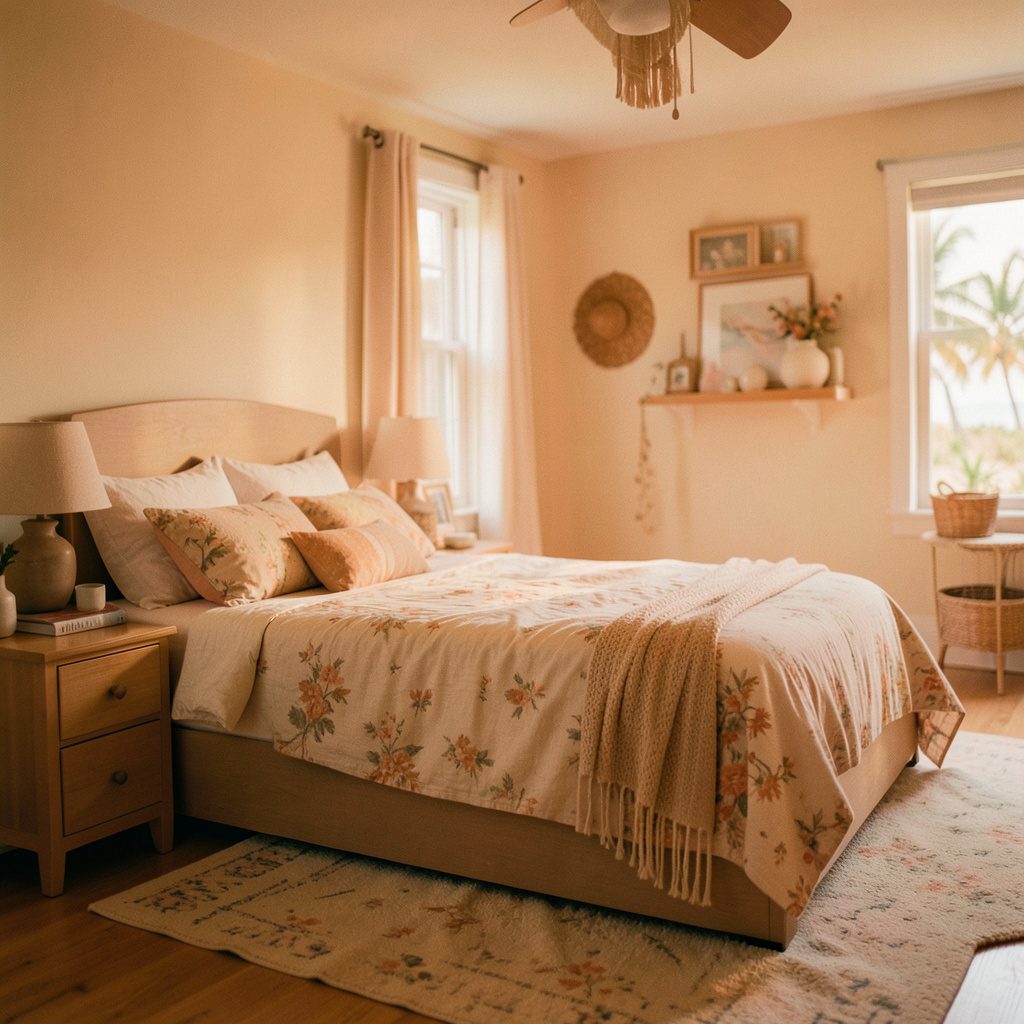
A mirror magnifies contrast as well as light. Keep the opposite view calm with a restrained palette, closed storage and a clear work surface, especially in an open-plan guest house where kitchen items may be reflected into the sleeping area. Pale walls, warm timber, simple linen textures and understated coastal pieces create a forgiving backdrop that suits many Australian homes.
Scale the furniture to leave breathing room. A low bed, slim bedside table or compact bench will reinforce the sense of openness, while bulky pieces can appear to press into the reflection. Test the arrangement from the doorway and from the place where a guest will sit. If the mirror shows a tangle of cables, bags or decor, simplify that view before judging the mirror itself.
Turn the room into a welcoming guest stay
The final details should make the room easy to use. Add a slim console or luggage bench, a wall hook and a warm bedside lamp so the mirrored wall does more than create a photograph. In a guest house used as a holiday let or family “granny flat,” reliable lighting, easy-clean surfaces and secure fittings are practical priorities as well as design choices.
Explore Joebolte’s curated room galleries and design articles for compact living spaces, coastal interiors and comfortable guest house layouts. Save the mirror proportions, frame finishes and furniture layouts that suit your own walls, then take those details to a local glazier for a measured quote. Build the room around one clear reflection and the space will feel brighter, calmer and far more generous.