Guest house window placement for better cross ventilation
A guest house feels more comfortable when it can capture cool outdoor air without relying entirely on air-conditioning. Thoughtful guest house window placement creates a direct breeze path through the building, helping heat escape, dampness dissipate and rooms feel naturally fresh. The right arrangement can also make a compact space feel larger and more connected to its surroundings.
Cross ventilation, sometimes called cross-flow ventilation, depends on two openings positioned so air can enter on one side and leave on the other. Their size, height and operability matter as much as their direction. A single large window provides light and ventilation, but a carefully paired opening usually delivers more consistent airflow.
Australian conditions make this especially important because climates and prevailing winds change considerably across the country. A plan suited to a shaded Adelaide garden may work poorly in humid Brisbane, while Darwin’s tropical conditions require a different response from Hobart’s cooler, windier weather.
Map the breeze before choosing openings
Begin by observing where air travels across the site. Note the direction of prevailing winds, the position of the house, nearby walls and trees, and how the land slopes. A summer breeze approaching from the rear may carry heat from a paved area or the main house, so an opening there could draw in warmer air rather than cooling the guest house.
Create a simple site sketch and mark the sun’s path as well as the breeze direction. North-facing openings can provide controllable winter light in many parts of Australia, but they also need shading during hotter months. West-facing rooms are particularly demanding in places such as Perth, where afternoon heat can be intense. External shading, deep reveals and properly sized louvres often deliver better results than small windows with weak internal blinds.
Look beyond the immediate footprint too. Eucalyptus trees, fences, sheds and garden borders can redirect wind or block openings. In a coastal setting, a gap between buildings may become a powerful wind tunnel. That can be useful during mild weather, but adjustable openings are essential when the wind becomes strong, cold or dust-laden.
Pair openings on opposite walls
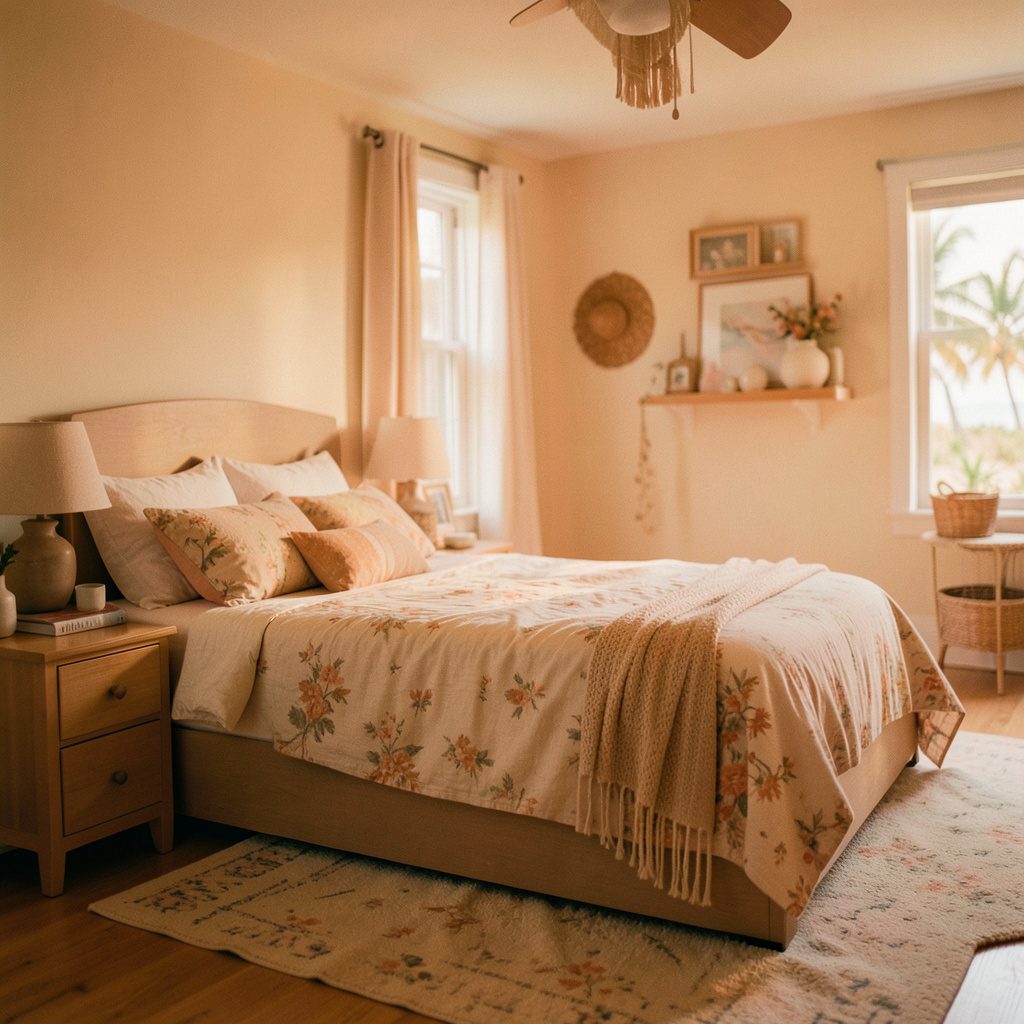
The most effective arrangement usually places windows on opposite sides of the guest house. Air enters through the windward opening, crosses the main living area and exits through a leeward window or door. This creates pressure differences that draw air through the interior instead of leaving it trapped near one wall.
Opening both sashes fully produces the strongest flow, although a high-and-low arrangement can help warm air rise and escape. For example, a lower window on the sheltered side can draw cool air in while an upper louvre or awning window releases rising heat. The “stack effect” works best when the guest house is reasonably enclosed, so small gaps around doors and ceiling cavities should be checked.
Placement also affects privacy. Windows facing a busy street, pool area or neighbouring property may need filtered views, timber screens or lower translucent sections. A bedroom might use a smaller, higher opening facing a quiet garden, while a larger window can connect the living area to a verandah. Sliding doors can provide excellent ventilation, but they should be positioned so one leaf can be opened sufficiently to create usable airflow.
Size windows for useful airflow
Window area should be considered in relation to the floor area served. A generous opening makes a difference in a small guest house, while a tiny window may only circulate air close to itself. The opening also needs enough clear space for furniture without becoming vulnerable to damage or difficult to secure.
Several operable windows can outperform one oversized window because they distribute airflow more evenly around the room. Corner windows are particularly valuable where the prevailing wind approaches diagonally. They create two escape routes and reduce stagnant zones, but every additional opening adds cost, heat loss, maintenance and opportunities for water ingress.
Hardware and screen systems affect performance. Insect flyscreens, security bars and heavy curtains can reduce airflow substantially, so specify them before finalising the opening size. Aluminium frames are common in the Australian renovation market because they suit coastal air, warm climates and low maintenance. In cooler regions, thermally broken or double-glazed units may be worth the additional expense, especially for year-round guest accommodation.
Adapt the plan to Australian conditions
In tropical northern Australia, humidity makes airflow more valuable during the wet season. Guest houses around Darwin, Cairns and Townsville often benefit from wide openings, shaded glass and ceiling fans that move air when outdoor conditions are too humid for strong natural ventilation. Operable louvres can exclude heavy rain while still allowing air movement.
Southern climates present a different challenge. Melbourne is known for its rapidly changing weather, including the strong southerly that can arrive without much warning. Adjustable openings allow a guest house to remain usable without letting a gust fill every room. In Adelaide, hot dry summers make shaded glass, reflective roofing and cross ventilation through shaded sides of the building especially effective.
Bushfire smoke can reduce the usefulness of open windows across eastern Australia, including Sydney, Canberra and regional NSW. Smoke-proof screens, filtered vents or a recirculating air-conditioning system may be needed on hazardous days. Where the property lies in a cyclone-prone part of northern Queensland, windows and screens may need to meet local wind and debris requirements.
The current National Construction Code and relevant state or territory variations should be checked before work begins. Council approval, heritage controls and bushfire-ember provisions can influence both the type and location of glazing. A local building certifier can clarify requirements early, preventing expensive changes after installation.
Control insects, weather and smoke
Cross ventilation is less effective when openings are too small to allow insects through. Full-screened windows offer the simplest solution, while security-grade screens can combine insect protection with stronger framing. Check that screens can be removed for cleaning without compromising security, and allow space to service tracks, hinges and drainage paths.
Keep the sashes and tracks in good condition so they open and close smoothly. Dust, cobwebs and salt deposits can restrict movement, particularly along the coast. For operable timber or aluminium components, professional window care can help maintain a clean finish and reduce the build-up that interferes with regular use.
External shutters, awnings and deep eaves provide more dependable heat control than curtains alone. They should be positioned to shade the glass without blocking airflow. In smoke-prone regions, consider closable vents and filtration, while still complying with fire-safety rules. Any device that changes the effective opening size should be included when assessing how much air can pass through.
Coordinate windows with the interior layout
Place the main ventilation openings where they support the way the guest house functions. A living area may open toward a verandah, garden or outdoor shower, while the bedroom can use cross ventilation through the adjoining wall. Internal doors should be openable or fitted with transfer grilles so air can circulate beyond a single room.
Wet areas need their own strategy. A bathroom window can supply fresh air after showering, but privacy, drainage and waterproofing must take priority. A small high window, obscured glass or a protected louvre may be more suitable than a large opening beside a shower. Kitchens and guesthouse pantries benefit from an extract hood, with windows supplying replacement air.
Think about furniture and guest comfort as well. Avoid placing a bed, desk or lounge chair directly in a cold draught, and use curtains or screens to soften incoming air. Doors, handles and hardware should be robust enough for frequent use. A well-planned opening also frames a view, captures good light and establishes a stronger relationship between the interior and the Australian landscape.
Choose the prevailing breeze, mark the likely inlet and outlet, and then size the openings around those two points. Confirm the details with your builder, certifier and screen supplier, then build the guest house so fresh air is part of its everyday comfort.